


- INTERVIEW
Interview with NRC
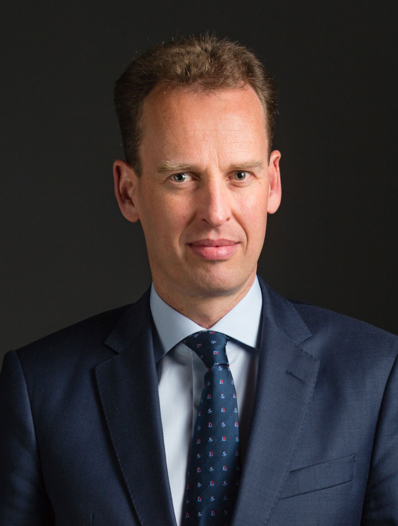
Interview with Frank Elderson, Member of the Executive Board of the ECB and Vice-Chair of the Supervisory Board of the ECB, conducted by Eva Smal on 15 April 2026
22 April 2026
People often say that the ECB has no role in climate policy. What do you respond?
No, we are not policymakers. We do not make climate or nature policies. That is done by others, elected governments. They are the ones who signed the Paris Climate Agreement and decided on the Green Deal. As a central bank, we do none of that. But we do have to take it into consideration. We are responsible for price stability, financial stability and ensuring sound, resilient banks. And we can only achieve those objectives if we take account of the climate and nature crises.
We cannot ignore the fact that, due to climate change, the Rhine was not navigable for eight weeks in 2022, which pushed food price inflation up by an additional 0.7 percentage points. If we failed to take that into account, we would not be doing our job. Because we would be deliberately overlooking a key driver of inflation. That is simply not an option, especially as droughts and floods are set to become more frequent and more severe.
I argued [in a recent opinion piece in the Financial Times] that Europe’s dependence on fossil energy poses risks to price stability. We do not determine that dependency as such, but it ís our responsibility to understand its implications for price stability and to make clear how policy choices by elected politicians affect the extent to which we can achieve our objective.
Banks need to identify all risks that are relevant to them and manage those risks properly. That includes risks arising from the climate and nature crises. So if banks provide mortgage loans to the owners of homes located in areas that are frequently flooded, they need to factor that into their credit risk management. If banks lend to power plants that use river water for cooling – and that river runs too low for several months – they obviously need to consider that too. There are hundreds of such examples.
What we cannot do is claim that everything to do with climate and nature is a political issue and so we turn a blind eye to it. Because then people would be entirely justified in reproaching us for not carrying out our tasks properly.
Some people argue that, on the contrary, the ECB could do more to combat climate change. One option that is sometimes mentioned is a dual interest rate, under which banks could borrow from the ECB at a lower interest rate for less polluting projects than for “dirty” ones.
Let me start again from a legal perspective. Our primary objective is price stability. But [according to the EU-Treaty] we also have a secondary objective: without prejudice to price stability, and this is a crucial condition, we shall also support the general economic policies of the European Union. And climate and nature are unquestionably part of that. So we are legally obliged to do something about it.
I often describe it as achieving two objectives at once. If there are two ways to ensure price stability, and one of them also contributes to the European Union’s climate and nature goals, then that is the option you should choose.
We are already doing a great deal. We incorporate climate considerations into our economic models –something we did not do in the past. And when a bank borrows money from us, it has to provide collateral. In determining the value we attach to that collateral, we also take into account the extent of its alignment with the Paris Agreement.
As part of an evaluation of our operational framework, we will look at whether similar instruments can be applied on a more structural basis so that they achieve two objectives at once.
So dual interest rates?
I’d rather not get ahead of those discussions.
How are banks actually doing on climate issues? Banks themselves publish glossy climate reports, but NGOs such as Milieudefensie are highly critical. ING has even been taken to court
I can’t comment on individual banks. In a nutshell, sound progress has been made over the last five or six years.
And in what areas have they made progress?
In identifying and managing their climate and nature‑related risks. In 2019 no more than 25% of banks had even begun to look at this seriously. After we as the ECB made it clear that banks had to do this, we saw that at the end of 2024, all but two of the 112 banks that we directly supervise had at least adequately mapped the risks they face. So all the other banks did their homework within the given deadline. I even complimented them on that – which is not something a supervisor does very often.
So what is still not sufficient?
Banks do not yet have a complete picture of all risks. Some have their risk management in order in certain countries where they operate, but not in others. Some banks have assessed the consequences of climate change but not of loss of biodiversity. What needs to happen now is to close the remaining gaps.
Are you able to intervene if a bank has identified all relevant risks but nevertheless increases its investments in oil?
We do not decide who a bank does or does not lend to. As long as the law allows coal to be mined, and banks still want to finance these activities, then they can do so. But then we want to see how they manage the associated risks, including the reputational and legal risks.
Let’s be clear: the energy transition is going to happen. Again, not because we at the ECB say so, but because it has been decided by politicians. Hundreds of billions of euros will be invested over the coming years. Banks will play a crucial role in this. If banks did not exist, we would have to create them. Households and businesses need financing. Banks must be able to continue fulfilling their role, in both good times and bad. That is why it is so important that they continue to draw the lessons from the financial crisis: be well capitalised, ensure sufficient liquidity, have sound risk management in place, observe proper governance and uphold the quality of your board.
Have those lessons been learned? Many people in the Netherlands still seem to have the impression that banks are just as risky now as they were during the financial crisis of 2008.
That crisis left deep scars. For me too, I was directly involved at the time as a lawyer at the Nederlandsche Bank. But it is important to explain that, since then, a great many things – significant things – have changed for the better. Banks are much stronger today than they were then, including Dutch banks.
That was hard work, it did not happen by itself. Legislators and supervisors – and of course the banks themselves – made this possible. European banking supervision was set up – during the financial crisis, banking supervision was carried out at national level, even for international banks. That has since been put right. A European resolution framework was put in place. In essence, this means that if a bank fails, taxpayers are no longer the first to foot the bill. Instead, shareholders and creditors bear the losses first, as it should be.
But it’s actually a good thing that people still have those memories of the crisis. Because we should not forget the lessons learned. Trust is built up slowly but can be lost very quickly. And back then it disappeared at lightning speed. That trust has since been gradually regained, so the very last thing we should do now is to give in to a wave of deregulation.
Across the world, the internationally agreed tougher capital requirements under Basel IV are under pressure. European banks complain that the playing field is becoming even more uneven. Isn’t there some truth to that?
For banks that operate internationally – and that is only a subset – it is indeed essential that the playing field is not distorted. That is why we concluded the international Basel agreements. We still believe they should be implemented as quickly and as fully as possible.
But if others want to deviate from them, it makes sense for us to see if we shouldn’t also make some adjustments. But it should never become a race to the bottom – then everyone will lose out.
It is a good thing that we’ve been able to get the banks back on a sound footing. Undermining that, especially under today’s uncertain conditions, strikes me as highly unwise.
What we need to do now is finish the work that is still incomplete: the banking union, the capital markets union and the Single Market. Every day we fail to do so, we are shooting ourselves in the foot. Make sure that doing business between Finland and Portugal is no different from doing business between Zeeland and Friesland. Make sure there is a single European deposit guarantee scheme. Make sure that capital which is now often invested outside Europe can more easily be invested within Europe – to finance the green transition, defence and digitalisation.
There are many problems in the world today that we as Europe cannot solve on our own, in areas where we depend on all kinds of actors we might prefer not to depend on. But the Single Market, the banking union and the capital markets union – those are things we can do ourselves.
There are concerns in the markets, and among supervisors as well, about private credit: non-bank lenders, often referred to as shadow banks. Do you share those concerns?
Let me first say that the term “shadow banks” does not do justice to the broad range of institutions involved. The sector includes insurers, pension funds and hedge funds, among other entities. And in itself it is fine to have multiple sources of financing in the economy; it can strengthen the resilience of the financial system and so help the economy. The European economy is still too dependent on bank lending.
The other side of the story, however, is that the supervision of banks is now up to standard. That is mostly not the case for the non-bank financial institutions.
Another problem is that non-bank institutions are less transparent. We know this is a market that is growing rapidly. That said, especially in Europe, it is still relatively small when you look at the financial system as a whole. The lesson for supervisors is simple: if something is growing fast, you need to keep a close eye on it. That is why we are now working internationally to close the gaps in our information.
Are you not very late, then, in requesting information?
Well, that reflects the fact that the phenomenon was not very large at first – and has since grown rapidly. As supervisors, given the limited resources we have, we need to focus on the most important risks. Nonetheless, it has been firmly on the international agenda for several years now.
Let’s imagine that those funds come under closer supervision. Wouldn’t there be a risk that another new form would emerge that cannot be supervised?
Yes, that’s a valid point. The starting point should be: the same risks and the same types of activities should be regulated in the same way. That has always been the approach. But you’re right – there will always be some bright spark, in a financial centre like Amsterdam’s Zuidas somewhere in the world, who figures out another way to get around the rules. And then regulators and supervisors will respond. That always takes time, of course: governments all over the world have to adapt legislation. So for now, what matters is raising awareness – alerting the public and lawmakers to the risks. For banks, that worked very well over the past 15 years.
Do you ever feel you’ve had enough of explaining the importance of climate policy and of sound banks. Do you ever feel like slamming doors?
I have endless energy for explaining this time and again. Everything I’ve learned over the course of my career – in the legal profession, and all those years at De Nederlandsche Bank – I can now fully put to use in this unique, central position. I now hold a role in which many doors open up for you. So I’m not going to go around slamming doors.
Euroopan keskuspankki
Viestinnän pääosasto
- Sonnemannstrasse 20
- 60314 Frankfurt am Main, Germany
- +49 69 1344 7455
- media@ecb.europa.eu.
Kopiointi on sallittu, kunhan lähde mainitaan.
Yhteystiedot medialle