


- SPEECH
Preparing for geoeconomic fragmentation
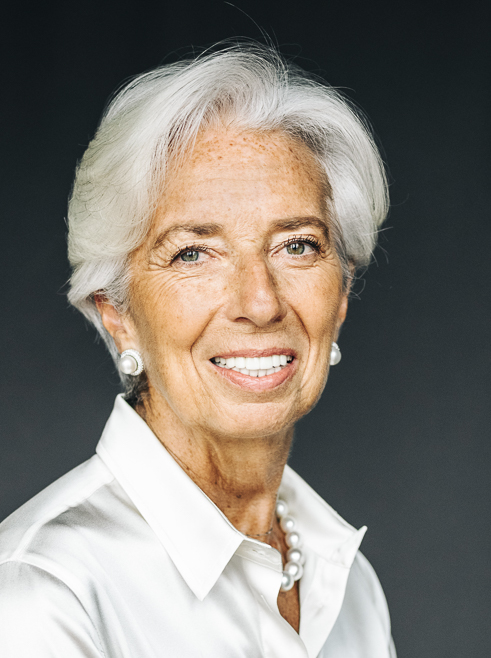
Opening remarks by Christine Lagarde, President of the ECB, at a roundtable discussion on “Chain Reaction: Navigating Geoeconomic Shifts and Dependencies” at the Munich Security Conference, Germany
Munich, 14 February 2026
It is a mark of how much our world has changed that a central banker speaks at the Munich Security Conference on supply chains.
A decade ago, this would have seemed like a category error. Today, everyone in this room recognises that trade is as much a security issue as an economic one.
Economic interdependence has deepened substantially in recent decades, creating intricate webs of cross-border trade flows. Where this was once seen as a source of stability, it is now a source of vulnerability: to global disruptions like the pandemic and to deliberate weaponisation of dependencies.
Eurosystem staff have mapped products that are hard to diversify and difficult to substitute – and we can stress test the implications of suddenly cutting off supply.
Our analysis suggests that a sudden 50% drop in supply from geopolitically distant suppliers would reduce manufacturing value added by 2-3% – with the impact concentrated in electrical equipment, chemicals and electronics.[1]
This shift matters profoundly for Europe. We are the most open of the major economies. Now we must make the transition to strategic autonomy.
But what does that actually mean?
We hear many terms – reshoring, friendshoring, coalitions of the willing – but they distill into three distinct strategies:
- Independence: rebuilding supply chains at home in critical technologies and inputs to reduce dependence.
- Indispensability: building strengths in critical “indispensable” areas of those supply chains.
- Diversification: spreading supply chains across partners so that no single disruption can paralyse our economy.
Each strategy is legitimate. But they are not the same – and without clarity, they can work at cross purposes.
If we pursue independence in sectors where we are lagging far behind, we risk imposing costs that erode competitiveness downstream.
For example, pursuing full autonomy in chip making could produce what one study calls "hollow champions" – firms unable to compete globally, supplying substandard technology to industries that are themselves strategic.[2]
Yet relying solely on trade – even within alliances – also carries risks. Trusted partners do not always remain so.
In some critical sectors, we need to build domestic capacity, even when it is temporarily more expensive. In 2023, the US conducted 114 orbital launches. Europe conducted three.[3]
Broad-brush strategies will not work. They may create unnecessary costs or miss real chokepoints. We need a targeted approach: understanding our strengths and weaknesses at a granular level, and evaluating costs and benefits.[4]
What does this mean from the ECB’s perspective? Let me focus on one key initiative.
The ECB needs to be prepared for a more volatile environment. As industrial policy becomes more assertive, geopolitical tensions rise and supply chains are disrupted, financial market stress is likely to become more frequent.
We must avoid a situation where that stress triggers fire sales of euro-denominated securities in global funding markets, which could hamper the transmission of our monetary policy. And this means we have to give partners who want to transact in euros the confidence that euro liquidity will be available if they need it.
That is why, last week, the Governing Council decided to expand our EUREP facility – our standing facility that offers euro liquidity against high-quality collateral.
This expanded facility provides permanence: central banks outside the euro area can now rely on continuous access to liquidity in euros, not just temporary lines.
It extends scope: we move from a regional to a global perimeter. Any central bank that meets basic criteria can request access, with flexibility on usage.
And it ensures agility: access is granted by default unless there is a reason to restrict it, speeding up the provision of liquidity.
This facility also reinforces the role of the euro. The availability of a lender of last resort for central banks worldwide boosts confidence to invest, borrow and trade in euros, knowing that access will be there during market disruptions.
In a world where supply chain dependencies have become security vulnerabilities, Europe must be a source of stability – for ourselves and for our partners.
That, too, is part of European security. And that is how the ECB plays its part.
Attinasi, M.G. et al. (2024), “Navigating a fragmenting global trading system: insights for central banks”, Occasional Paper Series, No 365, ECB.
Institut Montaigne (2025), "Autonomy or Indispensability? Identifying the EU's Semiconductor Lodestar", Policy Paper, December.
European Space Agency (2024), Report on the Space Economy, December.
Attinasi et al. (2024), op. cit.
Evropská centrální banka
Generální ředitelství pro komunikaci
- Sonnemannstrasse 20
- 60314 Frankfurt am Main, Německo
- +49 69 1344 7455
- media@ecb.europa.eu
Reprodukce je povolena pouze s uvedením zdroje.
Kontakty pro média