


- SPEECH
Monetary policy and financial stability in the euro area
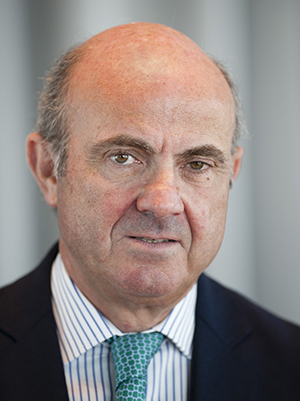
Speech by Luis de Guindos, Vice-President of the ECB, at the 16th edition of Spain Investors Day
Madrid, 14 January 2026
The global economy is facing a period of profound transformation and heightened uncertainty. The past year has brought major shifts in the international economic environment, driven by significant changes in US policy and the erosion of the multilateral, rules-based system which has long supported global trade and international relations. The introduction of substantial tariffs on US imports has disrupted trade flows, weakened confidence and created ripple effects across economies. Geopolitical risks remain elevated. The shift to a new paradigm – one where rule of law principles are challenged – reflects profound global uncertainties that are likely to persist.
These developments have had tangible implications for economic activity and financial stability in the euro area. Heightened uncertainty weighs on growth prospects through two main channels: by delaying firms’ investment decisions and so affecting euro area exports, and by prompting households to increase precautionary savings and consume less than expected. At the same time, fiscal policy in several euro area countries is set to ease to accommodate higher spending, including for military and security purposes. In this environment, disrupted trade patterns can further complicate inflation dynamics. Financial stability risks remain elevated as valuations are stretched in increasingly concentrated asset markets, non-banks exhibit liquidity and leverage vulnerabilities and increasing interlinkages with banks, while growing private markets remain opaque.
Euro area monetary policy
Inflation remains in a good place: having hovered within a narrow range since the spring, it stood at 2.0% in December. Energy prices were lower than a year ago, while core inflation, which excludes energy and food, also fell slightly. Strong wage growth continues to push up underlying inflation. However, more forward-looking indicators point to wage growth easing in the coming quarters, before stabilising towards the end of 2026. Our most recent assessment reconfirms that inflation should stabilise at the 2% target in the medium term.
Despite the challenging environment, economic activity has been resilient. It grew by 0.3% in the third quarter of 2025, mainly reflecting stronger consumption and investment. Growth was largely driven by the services sector, while activity in industry and construction remained flat. The economy also continues to benefit from a robust labour market, with unemployment close to its historical low.
Compared with earlier projections, economic growth has been revised up to stand above 1% this year and rise to 1.4% in the following years. Given the challenging environment for global trade, domestic demand is seen as the main engine of growth in the coming quarters. Business investment and substantial government spending on infrastructure and defence should increasingly underpin the economy. Consumption is also expected to rise but the household saving rate is only gradually coming down from still elevated levels. According to a recent ECB survey, the main reasons for high savings by euro area households include the fear of higher taxes in the future (Ricardian motives) and concerns about their future income (precautionary motives).[1]
Ricardian saving motives are linked to consumers’ expectations about future developments in taxes and welfare spending. Saving scores are thus higher in euro area countries with weaker fiscal positions, such as those with public debt-to-GDP ratios above 100%.[2] Precautionary saving motives are linked to income risk, which is strongly influenced by differences in individual perceptions about uncertainty. Elevated uncertainty and geopolitical developments also pose risks to business investment, with significant repercussions for euro area exports.
Risk environment
As an open economy deeply integrated into global supply chains and international financial markets, the euro area is exposed to external shocks and vulnerabilities stemming from geopolitical and trade developments. China has become increasingly competitive in key export sectors of euro area countries, with its share of global exports rising steadily, particularly in advanced manufacturing and green technology sectors.
But high uncertainty in the global environment does not appear to be reflected in current market pricing.[3] In fact, negative surprises – such as a re-escalation of trade or other geopolitical tensions, setbacks in AI advances with asset price adjustments or intensifying doubts regarding US fiscal credibility – could trigger abrupt shifts in sentiment, with spillovers across asset classes and geographies.
Geopolitical risk noticeably raises downside risks to growth.[4] Countries more reliant on trade, or burdened with higher levels of public debt, are at greater risk of amplification effects and resulting downside pressures.
Inflation could be affected in different directions: it could be lower if the rise in US tariffs reduced demand for euro area exports and if countries with overcapacity increased their exports to the euro area; or higher if more fragmented global supply chains pushed up import prices, curtailed the supply of critical raw materials and added to capacity constraints in the euro area economy.
On the financial side, the heightened uncertainty could result in higher risk premia, tighter lending conditions and weaker loan growth. While financial markets appear to price in very benign outcomes and downplay tail risks, safe-haven flows into gold have driven up prices to record highs, signaling high geopolitical risk and policy uncertainty.
The materialisation of geopolitical risks could form a common trigger for three of the main sources of risk and vulnerability for euro area financial stability today.[5]
First, stretched valuations in increasingly concentrated asset markets raise the risk of sharp, correlated asset price adjustments. Sudden market drawdowns could pose challenges to euro area non-banks, especially given their liquidity and leverage vulnerabilities, increasing the risk of fire sales. And opaque private equity and private markets could easily cause or amplify market downturns.
Second, growing interlinkages between banks and the non-bank financial sector could expose funding vulnerabilities in stressed market conditions.[6] As non-banks provide short-term funding to banks while banks provide credit for the leveraged activities of the non-bank sector, exposures are at risk on both sides of banks’ balance sheets.
Third, fiscal challenges in some advanced economies could test investor confidence, possibly triggering stress in sovereign bond markets. Market concerns over US fiscal credibility have risen on the back of persistently high fiscal deficits and have contributed to a steepening of yield curves. This may create risk spillovers from the United States to the euro area amplified by policy uncertainty and a depreciating dollar. Fiscal fundamentals in some euro area countries have also been persistently weak. That said, financial markets have so far smoothly accommodated high levels of issuance, but structural challenges could further limit the fiscal space.
Planned defence spending to meet the new NATO target, ageing populations and climate change, with the associated physical and transition risks, represent major challenges. To mitigate the current risks to the sustainability of sovereign debt, excessive fiscal deficits and public debts in the euro area need to be reduced in line with the revised economic governance framework. The consolidation of public finances should be designed in a growth-friendly way and combined with strategic investment and growth-enhancing structural reforms.
EU challenges ahead
In this uncertain macro-financial environment, preserving the resilience of banks and the broader financial system remains crucial. Banks should maintain sound solvency and liquidity positions to enable them to absorb potential shocks ahead. At the same time, we are making significant efforts to reduce undue complexities and simplify EU banking rules and the reporting and supervisory framework for banks. In view of the growing importance of the non-bank sector, it is also vital to monitor it more closely and strengthen its regulation from a macroprudential perspective.
We are facing a big change in the world order with mounting geopolitical challenges. The only viable path forward is to sustain our European values and promote stronger cooperation and deeper integration within Europe. To strengthen Europe’s growth prospects and reduce its vulnerability to future shocks, we need more Europe, not less. Unlocking the full potential of the Single Market is crucial, as is completing the banking union. A truly integrated market for goods and services would advance progress towards the savings and investments union, reduce national fragmentation and support deeper and more efficient capital markets.
The world has changed, and Europe has to adapt to this new paradigm. Greater cooperation and integration are not optional – they are the only way forward for Europe.
See ECB (2026), ECB Consumer Expectations Survey results – November 2025, 8 January. While other saving motives, such as intertemporal substitution and saving out of habit, are also significant, they scored slightly lower in importance.
In the survey, Ricardian motives are validated by the finding that respondents reporting trust in their national government assign a significantly lower importance to the Ricardian saving motive relative to respondents who distrust their government. These survey results are consistent with those of Tabellini, G. (2010), “Culture and Institutions: Economic Development in the Regions of Europe”, Journal of the European Economic Association, Vol. 8, No 4, pp. 677-716.
See Financial Stability Review, ECB, November 2025.
See ECB/ESRB report on the financial stability risks from geoeconomic risks, forthcoming January 2026.
See footnote 3.
Bochmann, P., Dieckelmann, D., Grodzicki, M., Horan, A., Larkou, C. and Lenoci, F. (2025), “Systemic risks in linkages between banks and the non-bank financial sector”, Financial Stability Review, ECB, November.
Europos Centrinis Bankas
Komunikacijos generalinis direktoratas
- Sonnemannstrasse 20
- 60314 Frankfurtas prie Maino, Vokietija
- +49 69 1344 7455
- media@ecb.europa.eu
Leidžiama perspausdinti, jei nurodomas šaltinis.
Kontaktai žiniasklaidai